
Online Addiction Counselling in Canada: Options, Programs, and Support
Getting help for addiction no longer means putting your life on hold or traveling far from home. Online addiction counselling brings professional treatment directly to you through video calls, phone sessions, and digital support programs that work around your schedule and responsibilities.
Virtual addiction treatment connects you with licensed therapists and counsellors who specialize in substance use disorders and behavioral addictions. You can access one-on-one therapy, group sessions, and structured recovery programs from anywhere you have an internet connection. These programs use the same proven treatment methods as traditional in-person care but offer more flexibility and privacy.
Online counselling works well for many people dealing with alcohol, drugs, gambling, or other addictive behaviors. Whether you need intensive daily support or evening sessions that fit around work and family, virtual programs provide professional care without requiring you to leave home or take extended time away from your responsibilities.
What Is Online Addiction Counselling in Canada?

Online addiction counselling through organizations such as the Canadian Recovery Collective connects you with trained professionals through digital platforms to help you overcome substance use and behavioural addictions. These services use video calls, phone sessions, or messaging to provide the same evidence-based treatments available in traditional settings.
How Online Addiction Treatment Works
Virtual addiction counselling delivers professional support through secure video conferencing platforms that protect your privacy. You connect with a certified addictions counsellor from your computer, tablet, or smartphone at scheduled appointment times.
Sessions typically last 50 to 60 minutes. Your counsellor will assess your specific situation during the first meeting and create a treatment plan tailored to your needs. This plan might include cognitive behavioural therapy, motivational interviewing, or other proven methods.
Most programs offer flexible scheduling options including evening and weekend appointments. You can access online addiction treatment from anywhere with a stable internet connection. The platforms use encryption to keep your conversations confidential and comply with health privacy regulations.
Who Can Benefit from Virtual Counselling
Virtual counselling works well if you have busy schedules, live far from treatment centres, or face transportation challenges. People dealing with mild to moderate substance use often find success with this format before problems become more severe.
You might prefer online sessions if privacy concerns have kept you from seeking help. Meeting with a counsellor from home removes the worry of being seen entering a treatment facility. This option also helps if you travel frequently for work but need consistent care.
Family members can participate in sessions remotely when appropriate. Parents, spouses, and other loved ones can join your recovery process without arranging separate transportation or time off work.
Differences Between Online and In-Person Addiction Counselling
Online addiction counselling uses the same therapeutic approaches as face-to-face treatment but removes geographical barriers. You receive care from licensed professionals trained in addiction treatment regardless of where you live.
The main difference is the delivery method. In-person sessions happen in an office or clinic while virtual sessions like those provided by the Canadian Recovery Collective occur through your screen. Both formats maintain strict confidentiality standards and professional boundaries.
Some people find it easier to open up from the comfort of their own space. Others prefer the structure of traveling to appointments and physically separating their treatment from home life. Your insurance coverage may vary between formats, so check your specific plan benefits.
Virtual sessions eliminate travel time and associated costs. However, severe addictions requiring medical supervision or detox services still need in-person care at specialized facilities.
Types of Online Addiction Counselling Services
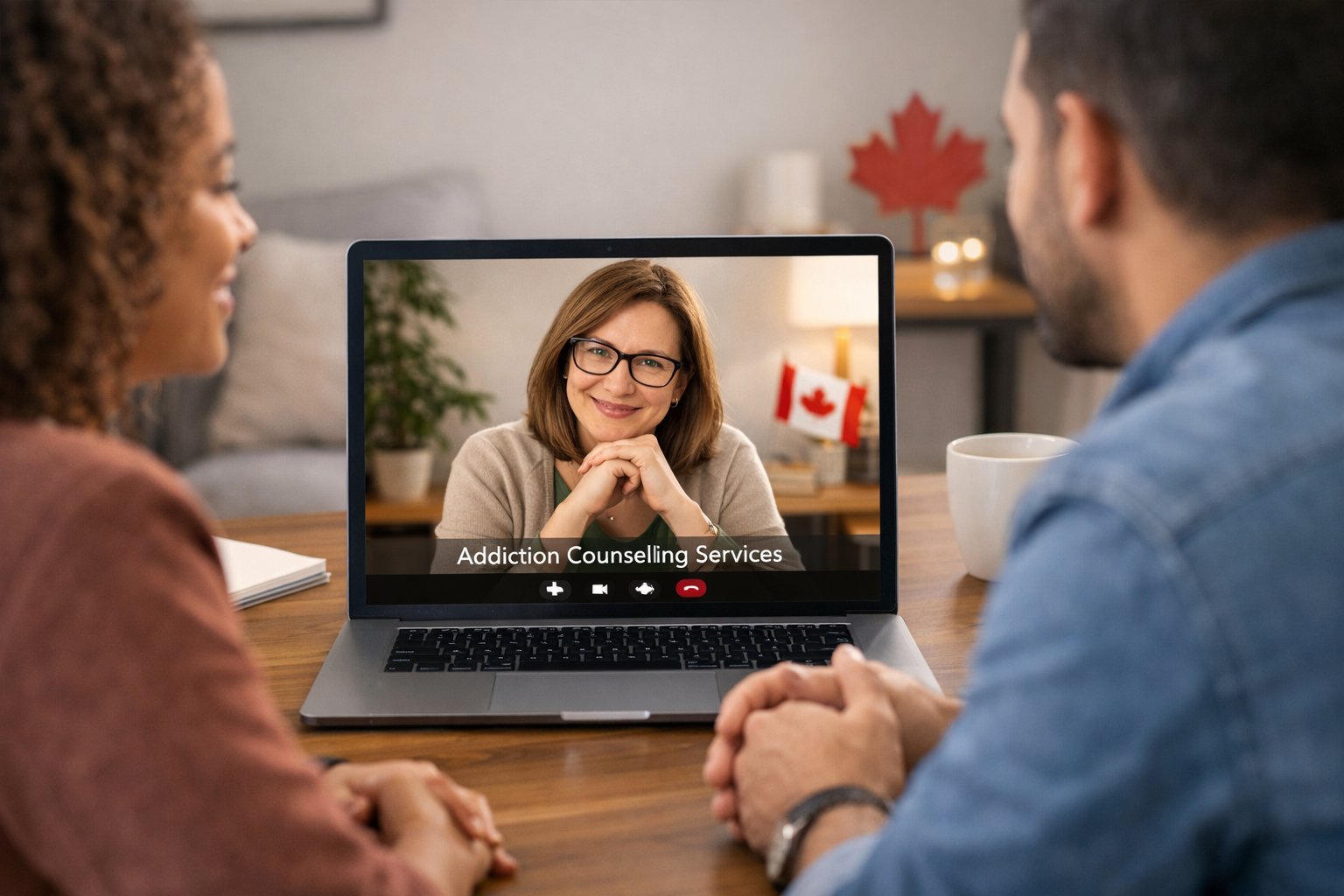
Online addiction counselling includes private sessions with a therapist, group meetings with others in recovery, and structured programs that provide multiple hours of treatment each week. Each type offers different levels of support and fits different recovery needs.
Individual Counselling Online
Individual counselling connects you with a licensed therapist through secure video calls. Sessions typically last 45 to 60 minutes and happen once or twice per week.
During these appointments, you work one-on-one with a counsellor who helps identify triggers, develop coping strategies, and address the root causes of addiction. The therapist tailors each session to your specific situation and recovery goals.
This format works well if you prefer privacy or need to address personal issues that contributed to substance use. You can schedule sessions around work and family commitments. Virtual therapy is covered by most insurance providers, making it accessible for many people.
The private nature of individual counselling allows for deeper exploration of mental health concerns that often accompany addiction. You build a consistent relationship with one professional who tracks your progress over time.
Group Therapy and Peer Support
Group sessions bring together multiple people who are dealing with similar addiction challenges. A trained facilitator leads these meetings, which usually run for 60 to 90 minutes.
You share experiences, learn from others, and gain support from people who understand what you’re going through. Peer support creates accountability and reduces the isolation that often comes with addiction.
Groups may focus on specific substances, age ranges, or recovery stages. Some follow structured programs like cognitive behavioural therapy, while others use open discussion formats.
Seeing others succeed in their recovery can increase motivation and hope. You practice communication skills and receive feedback from multiple perspectives instead of just one therapist.
Virtual Intensive Outpatient Programs
Virtual intensive outpatient programs provide several hours of treatment per week while you continue living at home. These programs typically require 9 to 20 hours of participation spread across multiple days.
A virtual intensive outpatient program combines individual counselling, group therapy, educational sessions, and skill-building workshops. You receive structured support similar to residential treatment but maintain your daily responsibilities.
These programs suit people who need more support than weekly counselling but don’t require 24-hour medical supervision. They work well for moderate to severe addiction when you have a stable living environment.
Most programs last 6 to 12 weeks and include relapse prevention planning and aftercare connections. You apply recovery skills immediately in real-world situations between sessions.
Evidence-Based Therapies Used in Online Counselling

Online addiction counselling through the Canadian Recovery Collective relies on structured, research-backed methods that help you identify triggers, manage cravings, and build skills to maintain recovery. These approaches translate well to virtual sessions when delivered by trained therapists.
Cognitive Behavioural Therapy Online
Cognitive behavioural therapy helps you recognize the thoughts and patterns that lead to substance use. Your therapist will work with you to identify situations that trigger cravings and teach you new ways to respond.
In online sessions, you learn to challenge unhelpful beliefs about using substances. For example, if you think “I need alcohol to relax,” your therapist helps you test that belief and find alternatives that actually work. This approach shows you how thoughts, feelings, and behaviours connect.
Research shows cognitive behavioural therapy delivers similar results whether delivered by video or in person. You practice skills between sessions and report back on what worked. Your therapist may ask you to track triggers, rate cravings, or try new coping strategies at home.
The structured format makes it easy to follow along during video calls. Many therapists share worksheets or use digital tools to help you practice the skills you need.
Dialectical Behaviour Therapy for Addiction
Dialectical behaviour therapy teaches you four key skill areas: mindfulness, distress tolerance, emotion regulation, and interpersonal effectiveness. These skills help when intense emotions or conflict push you toward using substances.
Your therapist will guide you through exercises that help you stay present instead of reacting automatically. You learn to sit with uncomfortable feelings without turning to drugs or alcohol. The emotion regulation module helps you understand what you feel and why, so emotions feel less overwhelming.
Online sessions work well for dialectical behaviour therapy because much of the work involves practicing specific techniques. You might learn breathing exercises during a video call, then use them throughout your week. Your therapist checks in on your progress and helps you adjust strategies that aren’t working yet.
Relapse Prevention and Recovery Planning
A recovery plan maps out the specific steps you will take to stay sober. Your therapist helps you identify high-risk situations, early warning signs of relapse, and concrete actions to take when cravings hit.
Evidence-based relapse prevention planning includes creating a list of people to call, places to avoid, and activities that support your recovery. You review this plan regularly and update it as your needs change.
During online sessions, you work with your therapist to build emergency strategies for different scenarios. What will you do if you run into old friends who still use? How will you handle stress at work without substances? Your plan includes answers to these questions and phone numbers you can call anytime.
Supporting Addiction Recovery Through Virtual Platforms

Virtual platforms provide structured medical guidance during early recovery stages, comprehensive mental health treatment for complex conditions, and ongoing connections that extend beyond initial treatment programs.
Addressing Withdrawal Symptoms Remotely
Online addiction treatment programs offer medical supervision through video consultations with licensed professionals who monitor your symptoms and adjust treatment plans as needed. Healthcare providers can assess your vital signs, evaluate your mental state, and determine if you need immediate in-person care.
Remote monitoring works best for individuals experiencing mild to moderate withdrawal symptoms. You can check in with medical staff multiple times per day through secure video calls. Your treatment team may recommend specific medications that help reduce cravings and ease physical discomfort.
Virtual platforms are not suitable for severe withdrawal cases that require 24/7 medical supervision. If you experience dangerous symptoms like seizures, severe dehydration, or extreme confusion, you need immediate hospital care. Your online treatment provider will help you understand when remote support is appropriate and when you need higher levels of medical attention.
Mental Health Support and Co-Occurring Conditions
Virtual intensive therapy programs address anxiety, depression, PTSD, bipolar disorder, and other psychiatric conditions alongside addiction treatment. Licensed therapists use evidence-based approaches through live video sessions to treat both conditions at the same time.
One-on-one counselling with master’s-level therapists helps you explore the underlying causes of addictive behaviors. Group therapy sessions connect you with others facing similar challenges. You can participate in cognitive behavioural therapy, trauma-focused treatment, and other specialized approaches from your private space.
Many people find that treating mental health conditions improves their addiction recovery outcomes. Your treatment team coordinates care between addiction specialists and mental health professionals to create an integrated approach. This dual focus addresses how mental health symptoms and substance use affect each other.
Aftercare and Continued Support
Aftercare support programs keep you connected to your care team after completing initial treatment. You can access check-in sessions, refresher courses, and ongoing counselling through the same virtual platform you used during active treatment.
Evening programs and flexible scheduling options let you maintain recovery support while managing work and family responsibilities. You can join weekly group sessions, schedule monthly individual therapy appointments, or access on-demand resources when you face challenges.
Long-term connection to professional support reduces relapse risk. Virtual platforms make it easier to reach out for help when you notice warning signs or feel overwhelmed. Your treatment team remains available through secure messaging and scheduled video calls, providing continuity of care that extends well beyond your initial program completion date.
Choosing the Right Online Addiction Counselling Program

Finding quality addiction counselling requires evaluating professional credentials and matching treatment approaches to your specific recovery needs.
Assessing Program Quality and Credentials
You need to verify that therapists hold proper licensing from provincial regulatory bodies. Licensed therapists in psychology, social work, or addiction counselling meet specific education and training standards.
Check whether the program uses evidence-based treatment methods. Cognitive-behavioural therapy and dialectical behaviour therapy have proven effectiveness for substance use disorders. Many programs also offer motivational interviewing and mindfulness-based approaches.
Look for platforms that maintain accreditation from recognized health organizations. Accredited programs follow strict quality standards for client care and confidentiality.
Review the therapists’ specialized experience with addiction. General mental health training differs from specific expertise in substance use disorders. Ask about their years of practice and success rates with clients facing similar challenges.
Consider whether the platform offers secure, encrypted communication. Your privacy matters, and reputable services protect your personal health information through HIPAA-compliant or equivalent technology.
Personalizing Treatment to Your Needs
Your recovery journey differs from others, so the program should adapt to your situation. Some people need intensive daily sessions while others benefit from weekly check-ins.
Determine whether you prefer individual therapy, group support, or both. Group sessions provide peer connection and shared experiences. Individual counselling offers private space to address personal trauma or co-occurring mental health conditions.
Evaluate scheduling flexibility that fits your work and family responsibilities. Evening and weekend availability helps you maintain employment while receiving treatment.
Consider cost structures and payment options. Some services accept insurance coverage while others offer sliding-scale fees based on income. Free counselling options exist for those with financial barriers.
Ask whether the program provides supplementary resources like mobile apps, educational materials, or crisis support between sessions. These tools strengthen your recovery between scheduled appointments.
Frequently Asked Questions

People seeking help for addiction often have practical questions about how online counselling works and what to expect from virtual treatment services. Understanding the qualifications of counsellors, session formats, insurance coverage, treatment methods, privacy protections, and effectiveness measures helps you make informed decisions about your care.
What are the qualifications of professionals providing online addiction counselling in Canada?
Professionals who provide online addiction counselling hold the same credentials as those working in traditional settings. These counsellors are typically licensed therapists, psychologists, social workers, or addiction specialists who belong to regulatory colleges in their province.
ASCO staff are skilled professionals with both educational qualifications and field experience. Staff members who belong to regulatory colleges must follow their college’s Code of Ethics along with agency conduct standards.
Counsellors receive ongoing training and supervision to maintain professional standards. This ensures that the quality of virtual services matches what you would receive during in-person treatment.
How does online addiction counselling work, and what can I expect from the sessions?
Virtual addiction treatment allows you to ask questions and discuss concerns about addiction, substance use, behavioral addictions, and mental health struggles from any location. Sessions typically happen through secure video links sent by email or over the phone if you prefer.
Individual sessions usually last 50 minutes. Your first two to three sessions focus on creating a treatment plan based on your specific recovery needs and goals.
Most programs offer 8 to 12 counselling sessions. The frequency depends on the program structure and your individual needs. You can access sessions through a computer or smartphone using confidential platforms.
During your sessions, counsellors provide one-on-one support, group counselling, case management, and peer support services. Your treatment plan gets reviewed regularly with you to track progress.
Are online addiction counselling services covered by health insurance plans in Canada?
Many online addiction programs receive funding from Ontario Health or provincial Ministries of Health. These publicly funded programs are available at no charge to clients who qualify.
Some private health insurance plans cover virtual addiction counselling services. You need to check your specific policy to understand what mental health and addiction services are included.
Specialized programs may have associated costs. For example, remedial programs designed for specific legal requirements typically charge fees. Contact the program directly to ask about pricing and payment options.
What evidence-based approaches are used in online addiction counselling?
Online addiction counselling uses several treatment approaches that research has shown to support the change process. These methods work the same way virtually as they do in traditional settings.
Common approaches include Cognitive Behavioural Therapy, which helps you identify and change harmful thought patterns. Motivational Interviewing supports you in finding your own reasons for change.
Other methods used are Dialectical Behaviour Therapy, Solution-Focused Therapy, and Narrative Therapy. Your counsellor may also use Emotion-Focused Therapy, Experiential Therapy, or Family Systems Therapy depending on your needs.
The counsellor conducts a comprehensive assessment and develops your treatment plan around approaches that fit your specific situation and goals. Your plan centers on your needs rather than following a one-size-fits-all model.
How can I ensure confidentiality and privacy during online addiction counselling sessions?
Your personal information receives protection under privacy legislation including the Personal Information Protection and Electronic Documents Act and the Personal Health Information Protection Act. Counsellors treat information from your sessions as confidential and do not disclose it without your consent.
Online platforms used for virtual counselling employ encryption and security measures. Agencies use reasonable security arrangements so that only authorized personnel can access your personal information.
There are specific circumstances where counsellors must legally disclose information. These include situations where you present danger to yourself or others, reasonable suspicion of child abuse exists, or a court order requires disclosure.
You can take steps to protect your privacy during sessions. Find a private space where others cannot overhear your conversation. Use headphones and ensure your internet connection is secure rather than public Wi-Fi.
What measures are in place to evaluate the effectiveness of online addiction counselling?
Programs use standardized provincial assessment tools to review your current situation and related life circumstances. These tools help measure your progress throughout treatment.
Your counsellor regularly reviews your treatment plan with you. This ongoing evaluation allows you to track whether you are meeting your recovery goals and make adjustments as needed.
Agencies may use your information internally to evaluate their own effectiveness and performance over time. This helps programs improve their services while maintaining your confidentiality.
Research shows that counselling supports the change process for addiction recovery. While no treatment guarantees success, the combination of regular sessions, evidence-based approaches, and ongoing assessment gives you the best chance for positive outcomes.